The Cultural Matrix – Summary
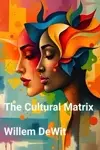
Willem DeWit’s The Cultural Matrix – The Invisible Power of Culture is an incisive exploration of the unseen forces shaping our identities, behaviors, and societies. With a multidisciplinary approach blending neuroscience, anthropology, sociology, and psychology, DeWit unpacks how cultural programming operates like the ‘software’ of the human mind, shaping our thoughts and actions from birth.
📥 Freely available for download
This book is not merely an academic dissection of culture—it is a call to self-awareness, urging readers to interrogate inherited beliefs, recognize cultural conditioning, and reclaim agency over their own cognitive landscapes. It offers a powerful framework for understanding the forces that dictate societal norms, as well as pathways toward personal and collective liberation.
Core Themes & Insights
1. The Cultural Matrix: What It Is & How It Works
Culture functions as an invisible hand, molding human perception and structuring societies. It operates through:
- Cultural Programming – the passive absorption of societal norms, beginning in infancy.
- Social Conditioning – the reinforcement of behaviors and values through institutions, traditions, and media.
- Cultural Transmission – the mechanisms by which beliefs and practices are passed across generations.
DeWit argues that while culture provides cohesion and identity, it can also function as a form of "cultural kidnapping"—restricting autonomy by deeply embedding ideologies into our cognitive architecture.
2. Cultural Programming and Neural Encoding
Modern neuroscience reveals that our brains are highly plastic, meaning they are continuously shaped by environmental stimuli, including culture. This book explores how:
- Mirror Neurons allow us to learn and adopt behaviors by observing others.
- Neural Pathways are strengthened through repeated cultural exposure, making certain ways of thinking feel ‘natural’ or ‘self-evident.’
- The Illusion of Free Will – many of our ‘choices’ are dictated by unconscious cultural programming rather than genuine autonomy.
DeWit masterfully connects cultural influences to neurobiology, illustrating how traditions, languages, and belief systems are quite literally ‘wired’ into us.
3. Anthropological Case Studies: Culture in Action
Drawing from field research and historical examples, The Cultural Matrix presents case studies that illuminate the depth of cultural influence:
- Yanomami Tribes (Amazon Rainforest) – How kinship ties dictate social structures and conflict resolution.
- Maori Facial Tattoos – Identity encoded in visual symbols, showing how culture marks the body as well as the mind.
- Balinese Trance Dance – A deep dive into how ritualistic movement, music, and shared experience reinforce cultural identity.
- Inuit Navigation & Language – How an environment-driven culture reshapes cognitive and spatial awareness.
These examples reveal that every culture is both a prison and a passport—a structure that both constrains and enables human expression.
4. The Digital Age: Culture’s New Frontiers
Technology is accelerating cultural evolution at an unprecedented pace. Social media, AI, and digital platforms have reshaped how cultural norms spread and adapt. DeWit highlights:
- The Algorithmic Mind – The ways in which artificial intelligence and data-driven platforms curate our digital experiences, reinforcing ideological bubbles.
- The Arab Spring & #MeToo – Digital movements that showcase the power of online culture to disrupt oppressive systems.
- Online Subcultures & Memetic Evolution – How internet-born cultures challenge and redefine traditional social structures.
In the digital era, the tools that once preserved culture (oral traditions, rituals, institutions) have been supplemented—and sometimes hijacked—by algorithms that dictate what information we see and what beliefs we adopt.
5. Cultural Gatekeepers: Who Controls the Narrative?
Culture is not a neutral force; it is curated and controlled by gatekeepers—individuals, institutions, and systems that shape societal narratives. These include:
- Religious Leaders & Elders – Guardians of tradition who reinforce established beliefs.
- Media & Corporations – Entities that manufacture consent through mass messaging.
- AI & Algorithms – The new ‘digital shamans’ determining what content is prioritized in our feeds.
By exposing these cultural architects, DeWit challenges us to question who benefits from our participation in cultural narratives—and who is left out.
6. The Neuroscience of Cultural Liberation
Escaping the cultural matrix is not easy, but it is possible through:
- Neuroplasticity Training – Conscious efforts to rewire the brain by engaging with new perspectives and practices.
- Mindfulness & Critical Thinking – Techniques for detecting cultural biases in one’s own thinking.
- Intercultural Exploration – Actively immersing oneself in diverse cultural environments to ‘hack’ and expand cognitive flexibility.
Drawing from Oliver Sacks’ neurological case studies, DeWit explores how individuals who experience drastic cognitive shifts—whether through brain injuries, psychedelics, or profound cultural dislocation—offer insight into the mechanisms of cultural deprogramming.
Conclusion: Reclaiming the Mind
The Cultural Matrix is more than an academic work—it is an intellectual insurgency against unconscious cultural captivity. DeWit compels us to see culture not as a static inheritance but as an evolving script that can be rewritten. The book is a guide to recognizing, interrogating, and—if necessary—rewriting the stories that shape our lives.
If culture is the software of the mind, then we, as individuals, must become conscious coders—actively choosing which programs to run and which to discard.
Key Takeaway: Culture is both a force of cohesion and a tool of control. The path to liberation lies in awareness, critical thinking, and the conscious reshaping of our cultural narratives.
Why You Should Read This Book
- If you are fascinated by how culture shapes identity, this book offers an interdisciplinary roadmap through anthropology, neuroscience, and sociology.
- If you want to break free from unconscious biases and inherited beliefs, this book provides practical insights on self-liberation.
- If you are a thinker, creator, or changemaker interested in reshaping cultural narratives, this book will challenge and expand your understanding of social conditioning.
Final Rating – A Bold, Thought-Provoking Masterpiece
DeWit’s work is a must-read for those seeking a deeper understanding of the cultural forces that shape us—and how to reclaim agency over our minds. If you’re ready to decode the cultural matrix, this book is your guide.
📥 Freely available for download
Articles on The Cultural Matrix:
- Cultural Kidnapping: Waking Up Inside Someone Else’s Dream
- Neuroplasticity vs. the Patriarchy: Who’s Winning in Your Brain?
- Culture Is Not a Costume: Wearing Your Identity Without Losing Your Mind
★ ★ ★ Availability
Hiatuca: Identity Loops and the End of Collapse
How cultural patterns embed as mental loops—and what occurs when those loops fail.
📥 Hiatuca
Cosmic Code: The Glitch That Sings
How the universe began to program itself—and why errors may function as hidden features.
📥 B&N Cosmic Code
Mind Less – Care More
Why the sense of total control over thought is an illusion—and what happens when we drop it.
📥 Mind Less
The Cultural Matrix
The hidden rules cultures use to construct their version of the human self.
📥 B&N Cultural Matrix
On Meaning
How purpose can be built in a world where traditional sources of meaning are breaking down.
📥 On Meaning
From Stardust to Self
The scientific story of how cosmic matter became conscious beings able to ask “What am I?”
📥 B&N Stardust
A Universe of Loops
How feedback patterns link quantum mechanics, galaxies, cultures, and consciousness.
📥 A Universe of Loops
Glitch
Why breakdowns in systems often generate unexpected order and beauty.
📥 Glitch
Cosmic Con
How the universe—and societies—may operate through elaborate deceptions.
📥 Cosmic Con
LOOP
Understanding the nested patterns that structure reality at every scale.
📥 LOOP
Finding Your Way
A pragmatic guide to exploring life’s deeper questions without rigid belief systems.
📥 Finding Your Way
The Intelligent Body
How bodily feedback systems guide healing, balance, and adaptive intelligence.
📥 The Intelligent Body
Before You Break Her Heart
How to remain emotionally present in relationships when conflict makes love fragile.
📥 Before You Break Her Heart
Abrahamic Faiths
How Judaism, Christianity, and Islam function as cultural systems shaping human societies.
📥 Abrahamic Faiths