From Stardust to Self
From Stardust to Self
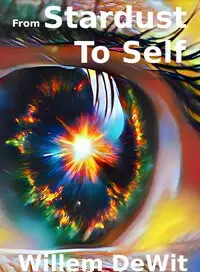
By Willem DeWit
From Stardust to Self is a profound exploration of the interconnectedness of the universe, human consciousness, and culture. Willem DeWit takes readers on a journey that spans the origins of the cosmos to the emergence of human self-awareness, blending scientific insights with philosophical reflections. The book is divided into chapters that delve into the universe's inherent bias, the role of chance and change in shaping reality, and the emergence of intelligence and consciousness.
Key Themes and Insights
The book begins with a scientific creation story, tracing the origins of the universe from the Big Bang to the formation of stars, planets, and life. DeWit emphasizes the universe's inherent bias toward "wins"—successful outcomes that persist and build upon each other, creating the complexity we observe today. This concept is paralleled in the evolution of life, where natural selection favors traits that enhance survival and reproduction.
One of the central themes is the interplay between chaos and order. DeWit describes the universe as a "cosmic slot machine," where chance interactions lead to the emergence of patterns and intelligence. This perspective challenges deterministic views of the universe, suggesting that randomness and unpredictability are fundamental to the creative process.
The book also explores the evolution of human consciousness, highlighting the role of the neocortex in enabling higher-order thinking, language, and culture. DeWit argues that human intelligence is not just a product of biological evolution but also a reflection of the universe's drive toward complexity and self-awareness. He introduces the concept of "cultural cloudware," the shared beliefs, values, and practices that shape human behavior and identity.
Strengths and Appeal
From Stardust to Self stands out for its interdisciplinary approach, seamlessly integrating cosmology, biology, neuroscience, and philosophy. DeWit's writing is both accessible and thought-provoking, making complex scientific concepts understandable to a general audience. The use of metaphors, such as the "cosmic slot machine" and "cultural spacetime," adds depth and richness to the narrative.
The book's emphasis on interconnectedness is particularly compelling. DeWit invites readers to see themselves as part of a grand cosmic narrative, where every atom in their bodies has a history that stretches back to the birth of the universe. This perspective fosters a sense of awe and belonging, encouraging readers to reflect on their place in the cosmos.
Critique and Reflection
While the book is deeply rooted in scientific theories, it also ventures into speculative territory, particularly in its discussions of consciousness and the future of artificial intelligence. Some readers may find these sections less grounded in empirical evidence, but they serve as valuable prompts for reflection and discussion.
One potential limitation is the book's broad scope, which covers a wide range of topics in relatively few pages. While this makes the book accessible, it also means that some concepts are not explored in as much depth as they might be in a more specialized work. However, this breadth is also a strength, as it provides a comprehensive overview of the journey from stardust to self-awareness.
Conclusion
From Stardust to Self is a captivating and thought-provoking book that bridges the gap between science and philosophy. Willem DeWit's exploration of the universe's origins, the evolution of life, and the emergence of human consciousness offers readers a profound sense of connection to the cosmos. The book's interdisciplinary approach, rich metaphors, and emphasis on interconnectedness make it a compelling read for anyone interested in the big questions of existence.
Whether you're a scientist, a philosopher, or simply a curious reader, From Stardust to Self will leave you with a deeper appreciation for the intricate web of life and the universe's endless potential for creativity and transformation.